
Mississippi Burning Redux
The FBI, the KKK, and How Three Murdered Civil Rights Workers Changed America

“I beseech you therefore, brethren, by the mercies of God, that ye present your bodies a living sacrifice, holy, acceptable unto God, which is your reasonable service.” -- Klansman prayer, King James Bible, Romans 12:1
Declassified Files and Historical Perspective
In July 2021, I drove through Tennessee, Georgia, Alabama, and Mississippi in four days. It doesn't take long to cross one state into another, and Mississippi welcomes visitors with an unexpected state sign: "The Birthplace of America's Music." Mississippi might have birthed B.B. King and Elvis Presley, but its music is less astounding than its landscape. Vast forests surround the interstate, gifting an appreciation of arboriculture.
About an hour from my Jackson destination is a town called Philadelphia. I didn't know anything about Philadelphia, Mississippi until I spent hours in Jackson, Mississippi reading FBI case files concerning three young civil rights workers: James Chaney, Andrew Goodman, and Michael Schwerner. Perhaps you know they were murdered in 1964 and the state of Mississippi refused to prosecute the suspects, but almost no one knows the full story.
The United States didn't have a national civil rights act until 1964, a direct result of violence against civil rights activists. I'm familiar with part of the law, also called Title VII, but in eight years of legal practice, I can't remember filing more than one Title VII case. In most states, employees would use state, not federal, law but that's assuming a relevant state law exists. Despite using the 1964 civil rights law, I was unaware it contained eleven different sections. Only with the knowledge I gained in Mississippi did two sections of the law, 42 U.S. Code § 1985 and 41 USC § 1986, make awful sense. Before we continue, context is useful.
“No President has really done much for the American Negro, though the past two Presidents have received much undeserved credit for helping us. This credit has accrued to Lyndon Johnson and John Kennedy only because it was during their Administrations that Negroes began doing more for themselves. Kennedy didn't voluntarily submit a civil rights bill, nor did Lyndon Johnson. In fact, both told us at one time that such legislation was impossible.” -- Martin Luther King, Jr., Playboy Magazine, January 1969, pp. 232, published posthumously
In 1961, civil rights activists rode interstate buses through the segregated South to force bus companies to honor a Supreme Court case, Morgan vs. Virginia, which disallowed racial segregation on interstate buses. The case was decided in 1946, and the reason you don't know about it is because Rosa Parks and the Montgomery bus boycotts were the main catalysts in finally causing desegregated busing in 1956.
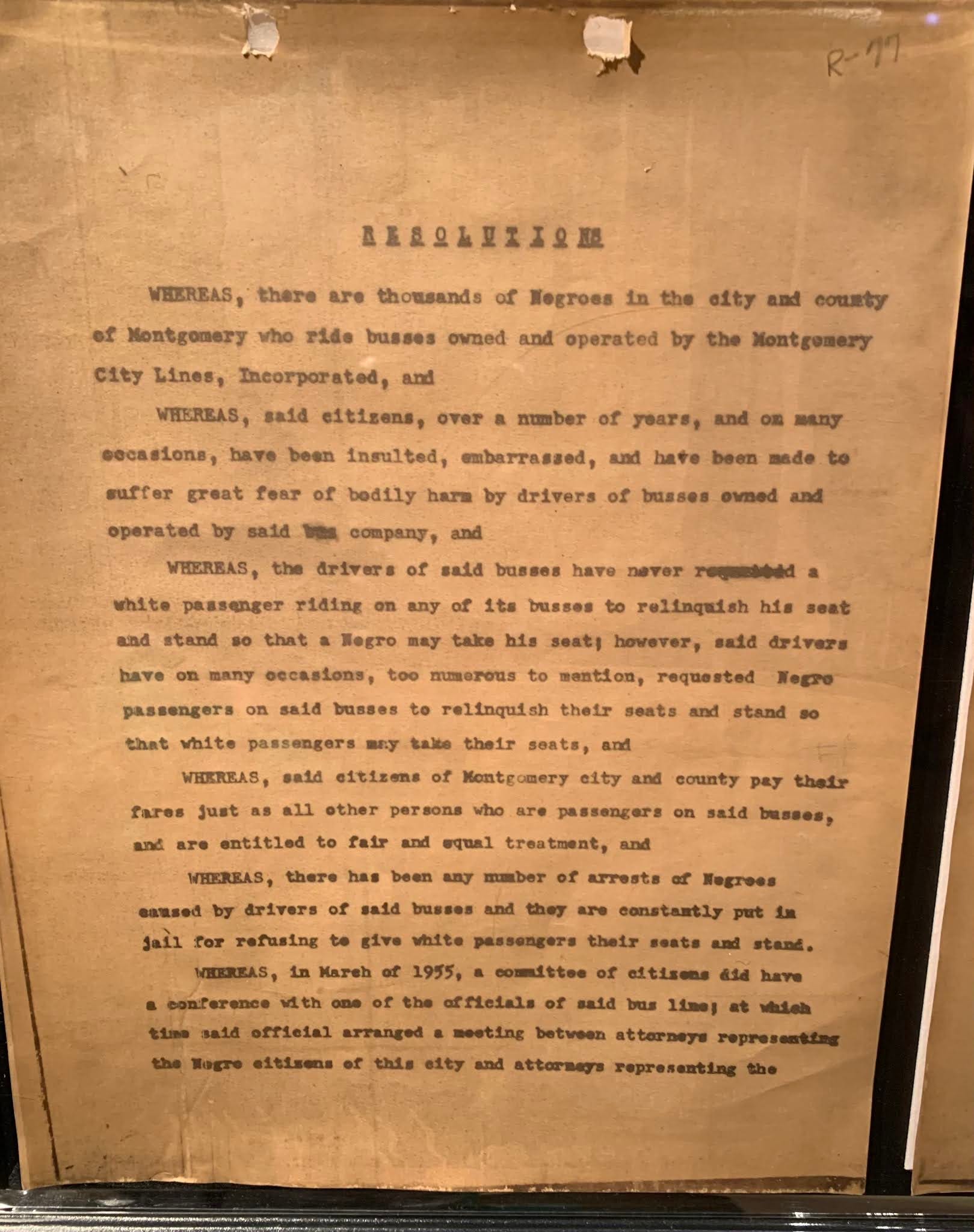
Yet, Mrs. Parks' journey began over a decade earlier, in 1943:
One day in 1943, Parks boarded a bus to register to vote. But the back of the bus was standing room only. Instead of stepping off to go to the back door after paying her fare in front, Parks walked down the aisle. The driver, James Blake, demanded that she disembark and re-board at the rear of the bus. Parks got off and waited for the next bus. (L.A. Times, Woo, 2005)
Twelve years later, 1955, is the year Mrs. Parks refused to give up her seat. Within two years, with the help of Martin Luther King, Jr. and many other activists, Montgomery, Alabama finally desegregated its buses.
If it took almost fourteen years to desegregate local Southern buses--which were financially dependent on African-American riders--the struggle for equal voting rights obviously would be harder.
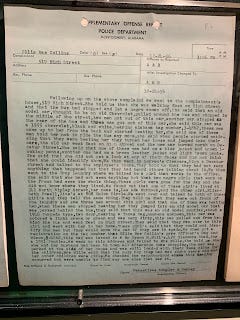
One year after a bomb exploded at an Alabama church, another church was set on fire in Mississippi, and months later, the charred bodies of three young men were exhumed in Philadelphia, Mississippi.
Historians and mass media focused on the three young civil rights workers and the corrupt local sheriff. In doing so, they presented an incomplete picture that erased judicial corruption and FBI negligence. Yet, until the FBI's case files were declassified and made available to researchers, no one could reshape the prevailing narrative.
Most people hear "declassified" and believe truth will out, but declassification of materials is merely the first step in re-education. Many documents containing explosive information are somewhere online, but have not yet been seen by a researcher or a publisher.
Browse just two agency websites--the National Archives and the Office of the Historian--and you will soon realize it takes more than one lifetime to become a history expert. Moreover, even if relevant but obscure documents have been seen by a researcher or publisher, the path from personal to general knowledge is long, windy, and arduous. Understanding historical context requires taking the same journey as storytellers who've studied Kurosawa's Rashōmon: awe and humility are givens, but the angles never end.
FBI Background
Let's discuss the FBI. Ernest Hemingway called it "anti-Liberal, pro-Fascist, and dangerous [sic] of developing into an American Gestapo." (Source: Hemingway's FBI file, stamped July 17, 1961) At one point, Hemingway, who was running counterintelligence ops in Cuba on behalf of the United States, introduced an FBI agent as "a member of the American Gestapo." That same FBI agent warned J. Edgar Hoover that Hemingway "could tarnish the reputation of the FBI by portraying its agents as 'the dull, heavy-footed, unimaginative professional policeman type.'" (Memo to Hoover from Leddy, Hemingway's FBI file, August 13, 1943) Though the FBI surveilled Hemingway until his suicide, his own family and friends believed Hemingway had mental problems and paranoia. (Modernism on File, Writers, Artists, and the FBI, 1920-1950, edited by Claire A. Culleton and Karen Leick, 2008)
The FBI's antipathy towards writers extended beyond Hemingway. Hoover once called John Franklin Carter, an American columnist--who also happened to be President FDR's personal spy--"a crack-pot, a persistent busy-body, bitten with the Sherlock Holmes bug and plagued with a super-exaggerated ego." (March 1947) The hostility was mutual: "Carter... has always viewed the FBI as a fascist organization," wrote Hoover in September 1941. Ironically, Carter's individual research was sometimes more accurate than the FBI's, especially regarding Japanese-American residents during WWII.
Two writers, two charges of fascism against the same American law enforcement agency... but what does this have to do with Mississippi? If one cardinal lesson exists from the civil rights movement, it's that fear or hatred always begets fear and hatred, and the FBI's fear and paranoia of writers led to writers hating the FBI and the FBI becoming paranoid.
Here's the sad thing about it. Of course, a lot of blacks hate white people too. See, hatred always breeds hatred. -- Buford Posey (1977), called a "crack-pot" by locals, probable high-level informant. FBI document 44-2227 has witness implicating Buford and contains handwritten note, "Not to be used in report. Index only."
Leadership matters most when you don't have it, and under Hoover, the FBI's attempts to boost its reputation at others' expense had a purpose: to consolidate domestic intelligence operations under a single umbrella. Predictably, Hoover's overestimation of his own competence, underestimation of other agencies, and disregard for checks and balances backfired. Not only did the FBI antagonize more competent intelligence operators, particularly the OSS, its arrogance splintered the intelligence community in ways that still reverberate. The United States now has no fewer than 18 different intelligence entities, and thanks to Hoover's FBI, 21st century American intelligence might have become both too big to succeed and too paranoid to be useful.
"The really big story is the OSP. The Office of Special Plans. Turns out when [President] Bush wasn't getting the intelligence he wanted, Rumsfeld bypassed the CIA and set up his own intelligence unit. They fed raw unvetted intelligence to Bush and [Colin] Powell who lied us into a war!" -- Official Secrets (2019)
Mississippi Burning
Now that you know the FBI desired total control of domestic intelligence operations and was willing to pursue consolidation at any cost, its role in Mississippi will become clear. To be fair, the FBI was addressing a deliberate campaign to disrupt Mississippi politics, which included placing young white idealists in danger in order to force the media to pay attention.
"[B]y tradition, only white traffic deaths were considered worth submitting... none of us questioned the professional proposition that the loss of a white life had more news value than the loss of a black life." -- journalist Warren Hinckle, If You Have a Lemon, Make Lemonade (1974) pp. 31
The campaign to "break Mississippi" produced violent counter-reactions, and though Mississippi occupies an outsized place in American civil rights history, it was only one part of a Southern reform strategy. In 1961, a Greyhound bus carrying Freedom Riders was burned in Anniston, Alabama. In 1963, a Montgomery, Alabama church was firebombed, killing four little girls. In the summer of 1964, twenty black churches in Mississippi were burned to the ground. Nowhere and no one was off-limits, and just as the civil rights movement was planned, so was the violence. Plainclothes police--some of them Klan members--would first attack journalists accompanying Freedom Riders to prevent a record of violence. In Mississippi, on June 16, 1964, the sheriff burned down a church. Read that again: the sheriff, an American community's most independent law-and-order facilitator, burned down a church. His goal was to prevent its use by civil rights workers and to deploy violence to break the will of anyone who dared work with outside community organizers.
"'Barnett do the talkin' and [Sheriff] Rainey do the killin'.'" -- FBI 157-2346, 44-2227
This same sheriff, Lawrence Andrew Rainey, ordered Chaney, Schwerner, and Goodman's station wagon to be targeted on June 21, 1964, the night of their murders.
From FBI case files: "On the evening which the Mt. Zion Methodist Church was burned at around 9:00PM... I observed a 1960 black GMC pickup truck followed by four cars pass my home headed... toward the church... I also recognized the car following behind the pickup truck... in which Sheriff [Lawrence] Rainey was a passenger on Sunday." -- Geraldine Stewart, statement given July 14, 1964
Why were five cars headed to a church under the aegis of Neshoba County's sheriff? To attack church members. After a church meeting, the Klan ordered church officers out of their cars, then beat them outside their own church. Sheriff Rainey most likely trailed behind until only Klan members were present and then assisted in the burning and/or the covering up of clues/evidence.
"[Billy] Birdsong [a KKK member] related that all of the judges, lawyers and jury supervisors are Klansmen or Klan sympathizers in Neshoba County... the [KKK] group discussed the fact that any judge, prosecutor, District Attorney or juror would be on the side of the Klan in any attempt to prosecute a Klansman for racial violence or his participation in the killing of the three civil rights workers." -- FBI files describing Neshoba Meeting, Saturday, December 12, 1964
Some historians believe three civil rights workers arrived in Mississippi to secure affidavits regarding the church burning and were murdered to prevent further investigation. This causal chain is incorrect. Michael Schwerner arrived in Mississippi as a CORE field worker in January 1964--months before the Mt. Zion church burning.
"WHEREAS, as a result of the movement into the State of a group of individuals self-styled as the ' Freedom Riders', there appears to be imminent danger of a breach of the peace, resistance to the execution of the laws of the State, with threatened unlawful assembly and possibly violence and destruction to private property and loss of life..." -- Mississippi Executive Department Jackson Executive Order
Remember: a sustained, interstate effort to inject political normalcy into Southern politics was occurring, an effort that required local patience and trust, not only because many civil rights workers were non-black, but also because it takes time to organize and register voters. (Barack Obama, a well-paid lawyer, campaigned for President as a "community organizer" so as to associate himself with America's civil rights movement.)
“The future of the United States of America may well be determined here in Mississippi. For it is here that democracy faces its most serious challenge.” -- Martin Luther King, Jr.
Indeed, the main goal in 1964 was to register African-American voters, a revolutionary act in the South, where poll taxes and other barriers existed to deny equal voting rights.
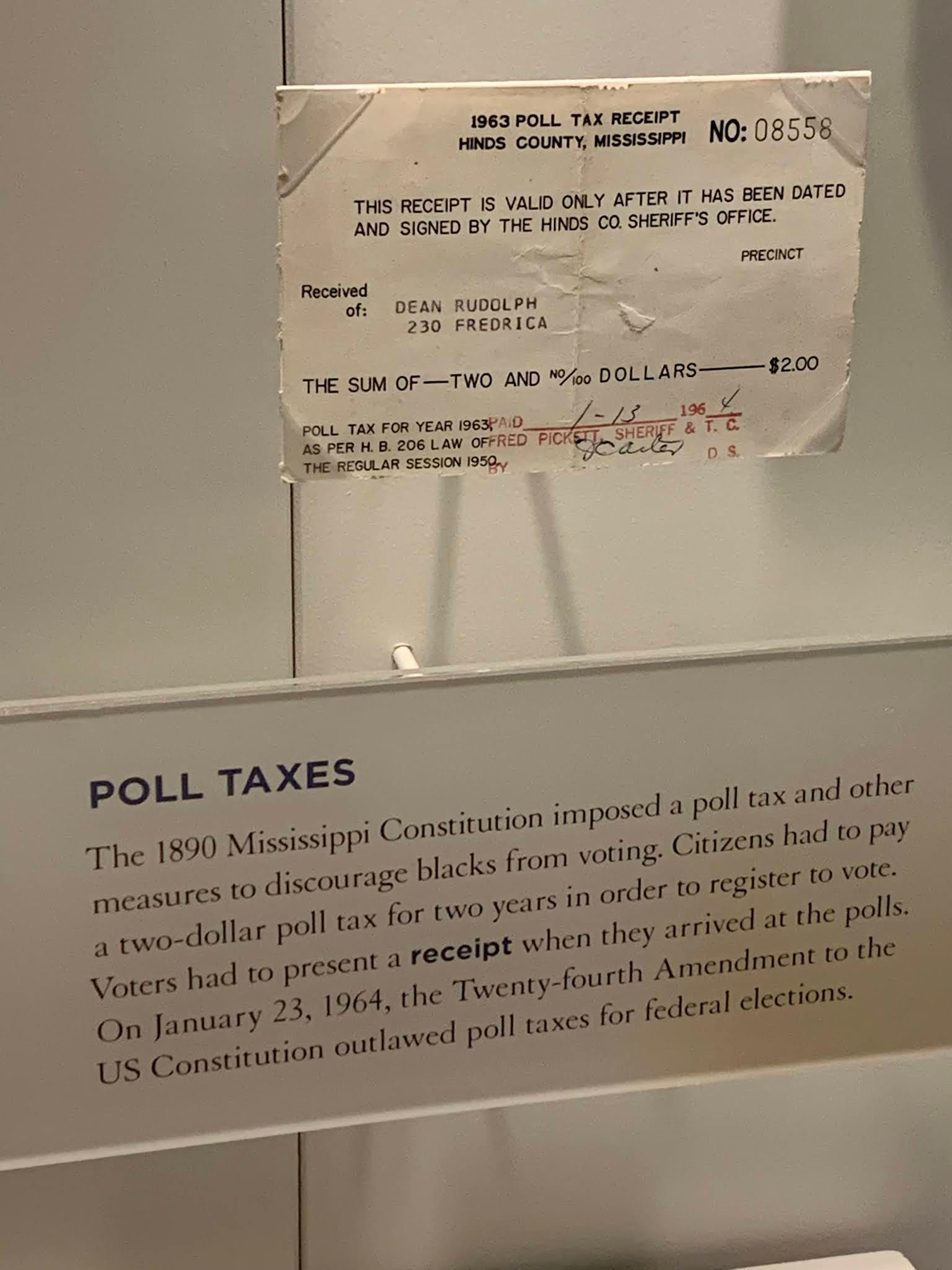
"Any person attempting to register [to vote at the court clerk's office] ... during the sitting of the Circuit Court of Neshoba County is to be arrested for contempt of court." -- from FBI "MIBURN" Files
Schwerner, like other civil rights workers, entered Mississippi to register voters, but also organized boycotts and amassed information for the Congress of Racial Equality (CORE), a well-connected, well-funded organization based in Chicago, Illinois (where former President Obama established his political career). Chaney's car was leased by CORE from a company based in Syracuse, New York, indicating CORE's national presence.
CORE had been honing strategies since the 1940s, when it began using nonviolent tactics to desegregate interstate buses. The publicity it received in the 1940s generated financial and legal support, which allowed CORE--the inventor of the "Freedom Ride" slogan--to attempt similar strategies in the deep South in the 1960s. Its efforts gained the FBI's attention, and CORE was one of the groups targeted by COINTELPRO.
Hatred and Fear
Other than obvious charges of agitation, what inspired such fear and hatred against CORE's Southern involvement? First and foremost, though Schwerner and Goodman appear white, the political establishment in Mississippi viewed them as anything but. Second, Sheriff Rainey was protecting his cut of illegal whiskey sales: the "Sheriff's Office has at least two 'collection men' whose function is to collect money from Negro cafe owners who illegally sell whiskey... [one of the owners is] employed by the Coca-Cola Bottling Company." (FBI Files) Third, many people, including the FBI, believed the men's disappearance was a hoax perpetuated by godless Communists.
The aims and purposes of the White Knights of the KKK of Mississippi, which splintered from Louisiana's Original Knights of the KKK, "are to preserve Christian civilization, protect and promote white supremacy and the segregation of the races, to fight Communism and to extend the dignity, heritage, and rights of the white race of America."
Hatred and fear are rarely driven by logic. Schwerner was despised in part because he looked different from anyone locals had ever seen. One witness stated, "this was the first time she had ever met a white man with a beard such as SCHWERNER had, and up to this point she had thought that SCHWERNER was a Negro."
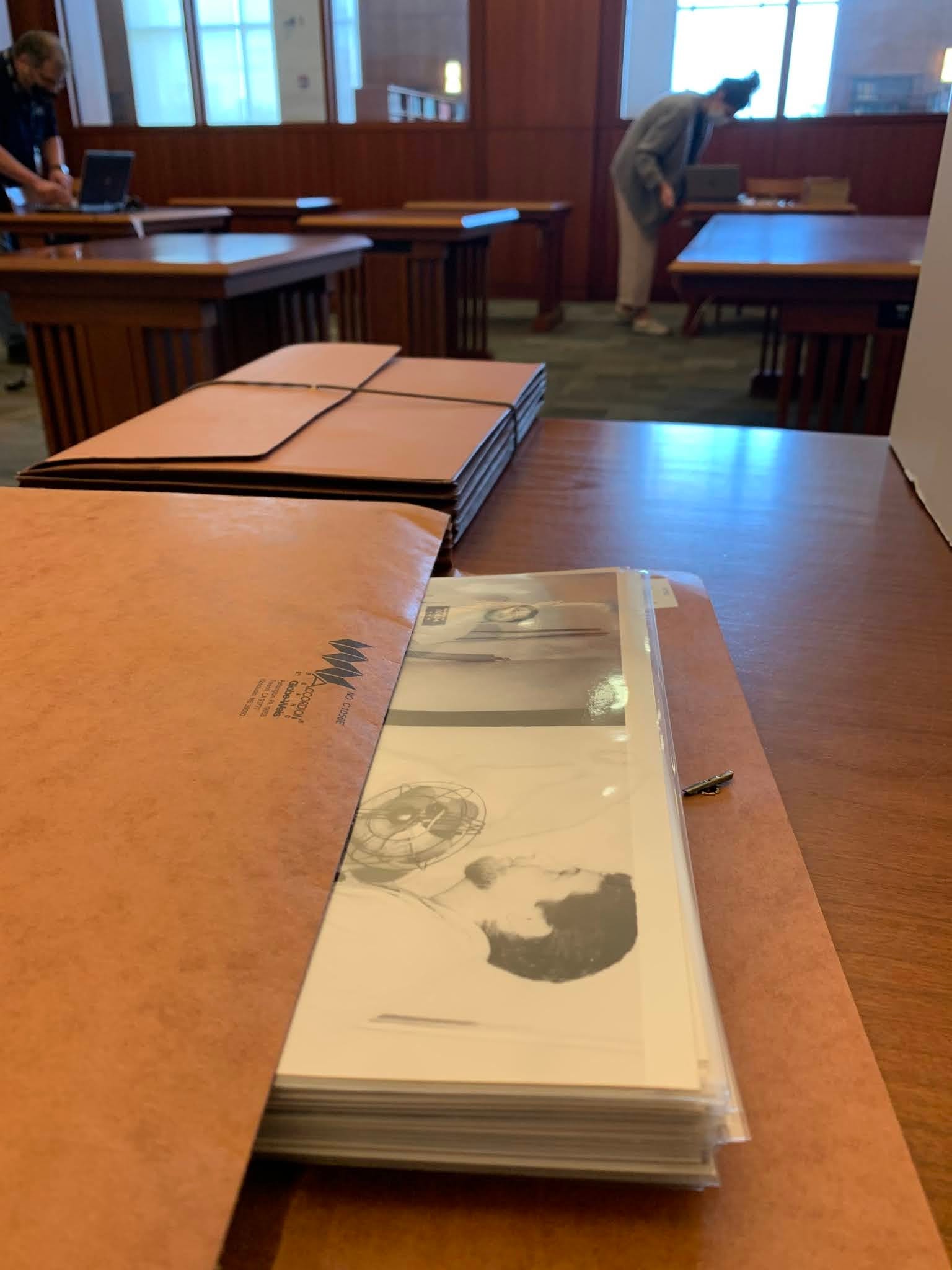
Schwerner's "beard"--a glorious goatee with some outgrowth near the part of the jawline closest to the mouth--most likely signaled Schwerner's admiration for beatniks. On the coasts, goatees in the 1960s were associated with counterculture, but the average Mississippian must have thought Schwerner wanted attention at their expense. The KKK derisively nicknamed Schwerner "Goatee" but did not give Goodman or Chaney nicknames. The more one examines FBI documents, the more one assumes Chaney and Goodman were murdered because they happened to be working with Schwerner.
"In Klan circles, 'GOATEE,' as Schwerner was known, was most contemptible." -- FBI report, November 12, 1964
Though Schwerner was assumed Jewish, he was raised Unitarian. While detained at the Morton mayor's house, Schwerner stated his grandfather was Jewish but his father had switched to Unitarianism.
Rita Schwerner, interview, 2014: "Neither Mickey nor I grew up in families in which there was a strong Jewish identity, though we both had grandparents who were immigrants to the United States. I don’t think either of us identified ourselves as directed or infused with anything that was particularly Jewish. I am not a religious person. In fact, I am an atheist and have been most of my adult life. That was certainly true of Mickey."
Whatever his faith, Schwerner was a born-and-bred New Yorker and couldn't be inconspicuous in Mississippi had he tried. The reason his Jewish background is relevant is because the KKK was not only anti-African-American, but anti-Semitic. Several FBI documents report rigorous debates between two KKK factions: one believing the Jew was the greatest threat to Christian civilization and the other, the African-American.
"Bowers advocates the use of the Klan to fight the Zionists or Jews, whom he believes are a greater threat to this country. The opposing faction believes that the Negro is more important; that the black man is a threat to their way of life and that they must be dealt with by the Klan... SAM BOWERS does not believe that the Negro is a threat to the American way of life. He has commented on occasions that the communists have made little headway in their attempts to win over the Negro race in the United States. However, BOWERS believes that the main threat and the target of the Ku Klux Klan should be the 'communist- Jew.'" -- file on Sam Bowers, Jr., of Laurel, MS, Imperial Wizard
We forget when we study American history that all non-Christians and all non-whites were, at one point in time, either segregated or excluded. The effect on the South, as well as other areas, was that Jews and African-Americans often lived and worked side-by-side because ex-New York, Jewish immigrants were not numerous enough to create their own communities. (A tourist visiting downtown Montgomery, Alabama may notice the Rosa Parks statue but not the clock nearby, on which a common Jewish surname is imprinted.)
Both Goodman and Schwerner were of Jewish descent and from New York, but unlike Schwerner, Goodman and Chaney were clean-shaven and had worked in construction. Despite any differences, all three were part of America's best and brightest. Schwerner protected the diminutive Robert Reich, a future Secretary of Labor, from high school bullies. Schwerner was married to a future lawyer and had resigned his position as a social worker in New York to go to Mississippi.
Goodman personified his last name: one witness stated, "GOODMAN has a strong desire to help his fellow man." Goodman was known as "a serious-minded person... interested in literature, history, drama, music, and anthropology. Goodman performed in several amateur stage plays, had two brothers, no girlfriend, and enjoyed folk music. According to one FBI report, he arrived in Meridian, MS from civil rights training in Oxford, OH one night before his murder.
Chaney was the oldest sibling and had three younger sisters and one younger brother. Despite being less than 150 pounds and asthmatic, Chaney was captain of both his high school football and track teams. After graduating high school, he started working as a plasterer's apprentice. When Chaney joined CORE, his mother asked, "Ain't you afraid of this?" "Naw, mama, that's what's the matter now--everybody's scared." [America's Uncivil Wars (2005), by Mark Lytle]
How such men could be considered threats to Christian civilization by anyone, including law enforcement, state officials, and a preacher is evidence of hate's power to overwhelm facts and logic. Regarding the government's involvement, most concerning was the FBI's failure to intervene earlier. Sadly, the FBI failed to collaborate with the National Guard and other agencies to protect civil rights workers because of its suspicion of the civil rights movement. Had the FBI done its job earlier or at least collaborated with other executive agencies, Schwerner, Goodman, and Cheney might be alive today.
Communism
"Americans as a whole feel threatened by communism on one hand, and, on the other, by the rising tide of aspirations among the undeveloped nations." -- Martin Luther King, Jr., Playboy Magazine, January 1969, pp. 234, published posthumously
In 1962, the Soviet Union placed nuclear-armed missiles in Cuba, approximately 90 miles from Florida. When Americans discussed Communism in the 1960s, the issue was as much ideological as epistemological: people knew unfamiliar enemies posed mortal threats not only to America's way of life, but to life itself.
"While the Communist Party, USA, was wiring President Kennedy to send troops to Ole Miss on September 30 in a telegram, the Communists in Cuba were installing missiles aimed at the United States." — from Ole Miss flyer opposing African-American James Meredith's enrollment
Communists were no strangers to propaganda, using America's de jure segregation to promote their allegedly more egalitarian values on gender and race. If America's ideal woman in the sixties was a suburban wife ready with martinis at 6'o'clock, the ideal Communist woman carried a sickle on one shoulder and a Kalashnikov on the other, simultaneously ready to work in the fields and to defend her land against intruders.
At a KKK member's trial in Jackson, MS:
Q: "You still do, and you were then opposed to Communism and you still are?"
A: "That's right."
Given prevailing tensions, claims civil rights workers were associated with Communists were inevitable. At the same time the FBI was searching for missing civil rights workers, it was asking acquaintances of the three missing men about a "publicity hoax." To their credit, not one witness believed any of the men were capable of such a thing: "she considered him [Chaney] to be the type of individual who would not in any way perpetuate a 'hoax' concerning his disappearance." The FBI thoroughly vetted allegations of a Communist hoax. One FBI report confirms USA's Passport Office, "Cuba Validation Section," has "no record of Cuban validation" requests by Cheney, Schwerner, or Goodman.
"After we had returned to his office he went into a long harangue on the segregation-integration of public facilities with Communism." -- seen in Mississippi Civil Rights Museum
Regardless of political party, pointing the finger at outsiders and foreigners during uncertain times is always good strategy, especially if the integrity of the voting process can be questioned. Upon discovering the ringleader of the murders, Edgar Ray Killen, once ran for Sheriff, I wasn't surprised. The Klan ran southeastern Mississippi, knew the times were a'changing, and saw murder as just another way to ensure power and payoffs in an area with scant economic opportunity. You might even say the ideal Mississippian shaved regularly, carried a Smith and Wesson gun, loved God and whiskey, and stood perpetually willing to defend the Southern way of life.
"Mississippi was ready to fight Germany... in 1939 when the rest of the nation was still isolationist... We've always been quick on the trigger. If you left it up to Mississippians, we'd still be in Vietnam." -- Buford Posey, high-level confidential informant, unclear if related to KKK member Billy Wayne Posey
Conclusion
Long after the bodies were found, Michael Schwerner's wife, still plagued with grief and guilt, lamented the unequal attention given to her white husband and not to numerous African-Americans who participated in 1964's Freedom Summer. While searching for Schwerner, Goodman, and Chaney, several corpses of missing (and presumably murdered) African-Americans were found, but none received the spotlight shined upon the three civil rights workers.
Driving out of Mississippi, I thought I saw a James E. Chaney Memorial Highway sign, but I cannot confirm if it was a Chaney, Goodman and Schwerner Memorial Highway or just one honoring Mississippi native Chaney. Mississippi didn't enshrine the conspicuous highway memorial until 2014, and state authorities might prefer to bury memories of Freedom Summer '64, given Mississippi's dramatic economic transformation. (Of all the Southern cities I visited, including Nashville, I enjoyed Jackson, Mississippi the most.) The state, equal parts inscrutable and beauteous, may be the birthplace of America's music and a lovely place to live, but caution is a wise ally. If the ghosts of the past are not properly honored, Billie Holiday's "Strange Fruit" may become Mississippi's unofficial state song, drowning out all other voices.
© Matthew Mehdi Rafat (written in 2021, self-published in July 2022 after numerous submissions to domestic and international journals were rejected)
"If we in America have reached that point in our desperate culture when we must murder children, no matter for what reason or what color, we don’t deserve to survive, and probably won't." -- William Faulkner, born and raised in Mississippi, The Paris Review (1956), the year following Emmett Till's murder